
 ANALYSIS · THERMAL POWER
APH and GGH: Heat-transfer performance, refurbishment and plant upgrade opportunities
APH and GGH do not generate electricity directly, yet can affect fuel consumption, auxiliary power, availability and flue-gas-treatment operation. Repair value lies in restoring system function, not merely supplying new parts. This article reviews public information through 11 October 2026 and presents technical and market interpretation, not a substitute for unit-specific surveys and design documents.
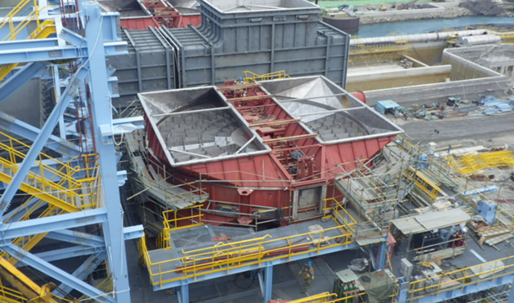
Equipment illustration from LJUNGSTRÖM; not a SuperMRO project or plant-condition photograph. LJUNGSTRÖM
Quick glossary
| Term | Meaning |
|---|---|
| APH · Air Preheater | Recovers flue-gas heat to warm combustion air. |
| GGH · Gas–Gas Heater | Exchanges heat between gas streams; a typical FGD application recovers upstream heat to reheat treated gas. |
| FGD / SCR | FGD removes SO₂; SCR uses catalysts to reduce NOx. GGH supports thermal management, not the treatment function itself. |
| Rotor / element / basket | The rotating assembly / heat-transfer plate / replaceable module holding the plates. |
| Seal / leakage / ΔP | Sealing component / cross-stream leakage / pressure drop through equipment. |
| Cold end / acid dew point | Lower-temperature region / onset of acid condensation, dependent on gas composition and operating conditions. |
| Heat rate / auxiliary power | Thermal energy per unit of electricity / power consumed by the plant itself. |
1. Related technology, different duties
APH transfers flue-gas heat to combustion air. In pulverized-coal boilers, primary air may also dry and transport pulverized fuel; secondary air supports combustion. Rotary regenerative elements alternately absorb heat in the gas sector and release it in the air sector. Two-, three- and four-sector arrangements must be understood from the specific design. [1]
GGH exchanges heat between gas streams. In a wet-FGD reheat arrangement, untreated hot gas heats treated gas before the stack. Objectives include thermal management, stack conditions and gas buoyancy; elimination of a visible plume in all weather is not guaranteed. GGH also serves SCR applications. Not every plant has GGH, and this illustrative FGD arrangement is not a universal fleet configuration. [2][3]
An important distinction: APH also includes fixed-surface designs, and GGH is not always rotary. Mitsubishi Power describes non-leakage GGH with separated gas streams and heat-exchanger assemblies. For non-rotary configurations, inspection focuses on tubes, bundles and the designed heat-transfer circuit; a rotor basket/seal package cannot simply be applied unchanged. [8]
APH · heat recovery for combustion air
GGH · illustrative wet-FGD arrangement
Heat transfers from the hot side to the clean side; auxiliaries are omitted.
2. Vietnam: evidence of demand, not a failure map
EVN reported in April 2025 that Vinh Tan identified APH heat-transfer module replacement as a heat-loss-reduction measure. A July 2025 Mong Duong 1 unit S1 overhaul-preparation report described EPS fabricating APH seals. In September 2026, Nghi Son 1 was studying O₂ measurement downstream of APH. On 10 December 2025, PV Power published Vung Ang 1 procurement needs including a GGH-material appendix. [4][5][6][7]
These dated examples indicate replacement parts, overhaul services and performance measurement. They do not establish current failures or open tenders. Other plants require their own operating records and surveys.
3. Diagnose the system, not just the baskets
APH leakage can involve worn seals, clearances, thermal distortion, rotor runout or alignment. Air leaking into gas can increase induced-draft fan throughput. An O₂ change across APH is a diagnostic clue, not proof without checking duct ingress and measurement reliability. In regenerative GGH, untreated-to-clean-gas leakage is a distinct issue requiring configuration-specific review of seals, purge/scavenge arrangements and differential pressures. [2]
Ash deposits and blocked passages raise resistance; cold-end corrosion and damaged enamel affect service life. Where SCR is installed, ammonia slip and ammonium bisulfate (ABS) can contribute to deposits under relevant conditions. Examine fuel, SO₃, temperatures, condensate and cleaning, rather than attributing every problem to baskets. [3]
Bearings, drives, lubrication, sootblowers, sensors and rotor protection also matter. Abnormal heat or fire risk must be addressed under plant procedures; no universal intervention settings are proposed here.
4. OEMs and the Vietnamese supply chain
Official Howden and LJUNGSTRÖM sources describe APH/GGH, seals, heating surfaces and retrofit services. L&T Howden identifies APH-component manufacturing at Hazira, India. These are technology references, not identification of the OEM at every Vietnamese unit. [1][2][3]
EPS seal fabrication for Mong Duong 1 demonstrates a domestic maintenance and parts-manufacturing role, distinct from complete-equipment design OEM status. Reviewed public evidence is insufficient for a complete OEM list or confirmation of a Vietnamese full-system manufacturer. Identify each unit through nameplates, as-built drawings, O&M manuals and parts lists; the EPC or boiler supplier is not automatically the heater OEM. [5]
Mitsubishi Power is another OEM technology reference for non-leakage GGH, not confirmation of the installed manufacturer at the Vietnamese plants cited here. [8]
5. Opportunities extend beyond selling baskets
Market interpretation: nearer-term opportunities include pre-outage surveys, long-lead materials and wear restoration. Four scopes are useful: baseline testing; elements/baskets, seals and auxiliary spares; mechanical overhaul, cleaning and alignment; and engineered upgrades to profiles, materials, sealing, cleaning or monitoring. Compatibility with installed equipment is essential.
Full replacement is not automatic when one layer deteriorates, nor is a low-cost basket sufficient if sealing and drives remain unresolved. More surface area or a different profile affects heat transfer, pressure drop, weight and cleanability together. Suitable local mechanical fabrication may assist schedules, with materials, tolerances and design responsibility controlled.
6. Assessing replacement and upgrade proposals
Collect rotor configuration, hot/intermediate/cold layers, basket dimensions, profiles, plate thickness, materials/coatings, seal layouts and drive data. Obtain matched-load temperatures, pressures, upstream/downstream O₂, ΔP, fan power, fuel and cleaning/failure histories. GGH also needs FGD-side and clean-gas conditions.
Proposals should state calculations, compatibility boundaries, drawings, material certificates, coating quality, transport/lifting plans and outage schedules. Acceptance includes clearances, mechanical checks, trial rotation, protection and comparable-condition performance testing. Physical fit alone does not establish thermal or aerodynamic equivalence.
7. Quantify value rather than promise a percentage
Annual benefits should use substantiated fuel and auxiliary-power savings, maintenance costs and outage-risk changes, less additional costs. Separate APH and GGH value and avoid double-counting fuel savings and heat-rate improvement. Simple payback equals total investment divided by annual net benefit; it is only a screening measure.
Prioritize severity, expected operating hours, outage windows, lead times and verifiability. Public data reviewed cannot support a monetary market-size estimate or a universal saving rate. A credible opportunity has a verified scope, clear acceptance criteria and an achievable supply plan.
8. SuperMRO perspective: records first, operating results last
An appropriate approach is to clarify requirements, coordinate surveys and qualified specialists, match OEM information to installed equipment, and organize supply with outage and quality-document plans. Confirm execution capability and responsibilities for each package rather than infer them from a catalogue.
APH/GGH is a market for reliability and evidence. A good component creates value within a sound engineering plan verified by operating results.
Sources and scope
- L&T Howden · APH principles
- Howden · Rotary regenerative heaters
- LJUNGSTRÖM · Gas–Gas Heaters
- EVN · Vĩnh Tân / heat-rate measures · 24/04/2025
- EVN · Mông Dương 1 / overhaul preparation · 24/07/2025
- EVN · Nghi Sơn 1 / monitoring · 10/09/2026
- PV Power · Vũng Áng 1 / GGH materials · 10/12/2025
- Mitsubishi Power · Non-Leakage GGH