
 TECHNICAL NEWS · STEAM DRUM LEVEL
Eclipse® 706: Guided wave radar for power-plant steam drum level
Steam drum level links directly to steam quality and operating reliability. AMETEK Magnetrol Eclipse® 706 is an option to evaluate for new or upgraded level measurement. Its value depends on the probe, installation and signal validation—not the transmitter alone.
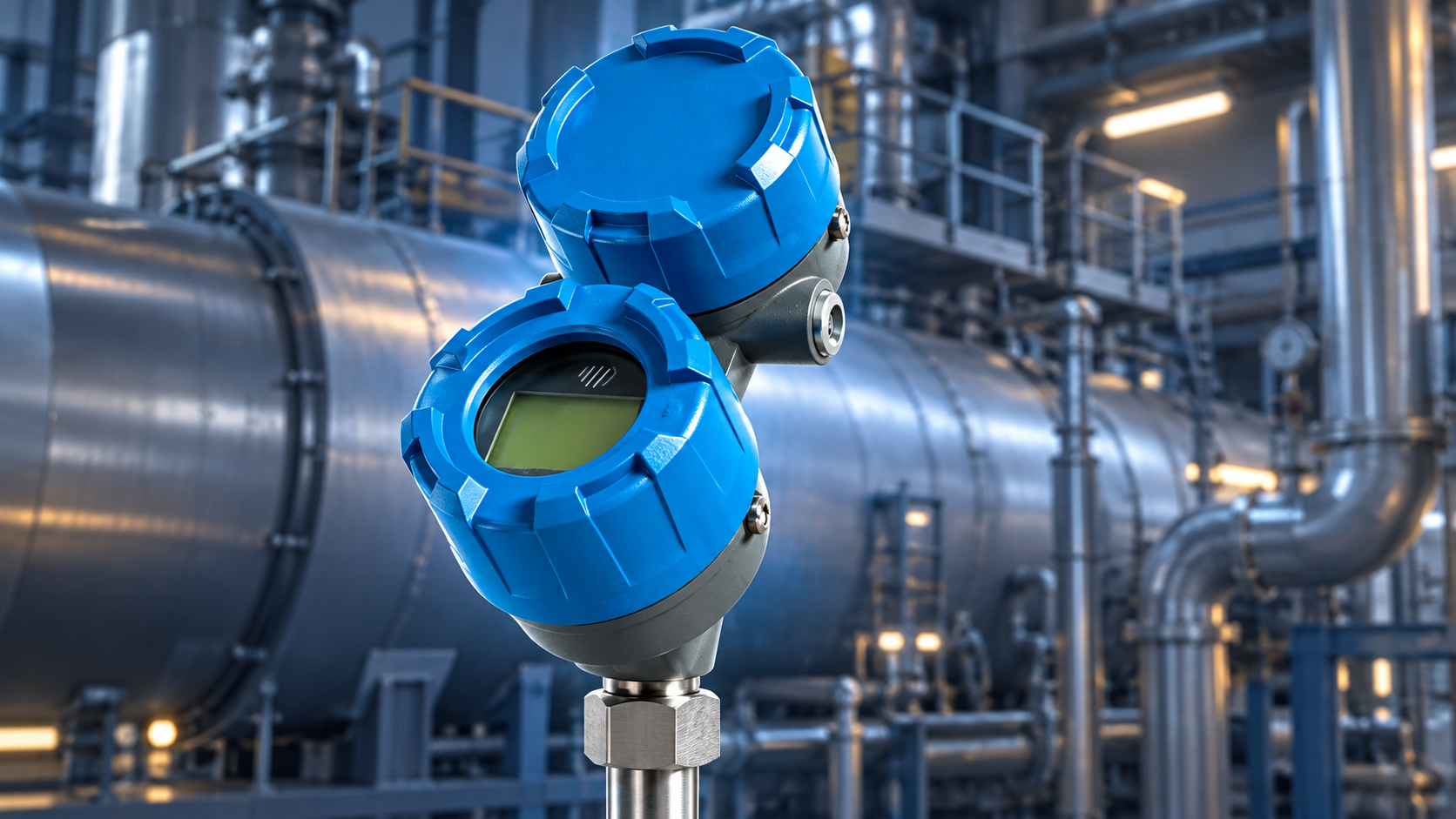
AI-generated illustration by SuperMRO, based on the AMETEK Magnetrol Eclipse® 706 product image; not an actual installation photograph or a 7yS configuration drawing. · AMETEK Magnetrol
Quick terminology
| Term | Explanation |
|---|---|
| Steam drum | Water–steam separation vessel in drum-type boilers; not every power boiler has one. |
| GWR / TDR | Guided Wave Radar / Time Domain Reflectometry: locating the liquid surface from pulse travel and reflection time. |
| Shrink / swell | Level movement caused by changing steam-bubble volume as pressure/load changes, not an equivalent change in water inventory. |
| Chamber / bridle | External vessel connected to the steam/water system; its conditions must appropriately represent the measurement target. |
Why reliable drum level matters
High level can increase water carryover; excessively low level can affect circulation and cooling, depending on boiler design. AMETEK discusses unreliable indication during fast starts and cycling, and maintenance burdens of traditional measurement. These are plant-specific assessment topics, not evidence that every unit is defective. [2][3]
How Eclipse® 706 measures
Electromagnetic pulses travel along a probe; liquid-surface reflections provide level through transit time. The HART version provides continuous 4–20 mA output for control integration. Display, echo curves and diagnostics support signal checks. Unlike differential-pressure inference, GWR does not derive level from pressure difference and density; correct probe, medium and installation still matter. [1]
Saturated steam: the 7yS probe and compensation
Changing saturated-steam conditions can delay GWR pulses, producing an apparently low level without compensation. Eclipse® 706 with the 7yS coaxial steam probe uses a reference target to assess the vapor effect and correct level. The manual requires the transmitter and 7yS probe to remain a matched set. [4]
Manual 57-606 lists 7yS up to 207 bar and 425°C in a side-mounted chamber. These are not universal 706 ratings or approval for any flange/chamber. Verify pressure–temperature ratings of the complete assembly; another probe’s maximum rating must not be applied to saturated-steam service. [4]
Four configuration checks
| Item | Configuration/feature | Verify |
|---|---|---|
| Probe and steam compensation | 7yS for suitable saturated-steam service | Confirm matched set, measurement zone and compensation conditions. |
| Pressure assembly | Probe, chamber, connections and flanges | The lowest-rated component limits the assembly. |
| Signal and diagnostics | 4–20 mA/HART in the appropriate version | Verify DCS card, supply, fault setup and version documents. |
| Safety function | Appropriate version and certification | Engineer the loop and proof tests separately; no automatic system-wide SIL. |
Better measurement does not replace control or protection
GWR does not eliminate physical shrink/swell. Compare level with drum pressure, steam and feedwater flows, and review single-/three-element control against the plant design. External-chamber temperature/density differences, connections or blockage can cause discrepancies.
SIL certification is version- and condition-specific. A capable device does not certify an entire protection loop: assess architecture, logic, final elements and periodic proof testing against the Safety Manual. Do not automatically remove sight gauges, independent channels or interlocks when installing radar. [5]
Where plants may evaluate it
Drum-type pulverized-coal or CFB boilers and suitable HRSG drums are the main focus. Do not apply this drum-level solution indiscriminately to once-through boilers without drums. Deaerators, condensate tanks and feedwater heaters require separate level/probe assessment; not every vessel needs a steam probe. [1][3]
Steam systems in refining, chemicals and paper, or suitable cement/steel waste-heat systems, may also merit assessment where water–steam equipment exists. This is an application direction, not blanket suitability for every process.
Survey through acceptance: select the whole measurement system
Collect design/operating pressure and temperature, level span/zero, connection elevations, chamber drawings, materials/flanges, water condition, deposits and load regimes. Review removal access, electronics ambient temperature, insulation, power, protocol, Ex requirements and control/protection role.
Acceptance should check configuration, echoes, DCS signal, fault diagnostics and comparison with a reference channel in approved operating regimes. Plant-approved changes require qualified personnel and safe procedures; do not dismantle pressurized equipment. Assess reliability and maintenance benefits with data, not a fixed heat-rate saving claim.
SuperMRO perspective: trustworthy measurement starts on site
SuperMRO can help clarify requirements, gather records and coordinate configuration review with the manufacturer or a suitable technical party before agreed supply, replacement and integration. This technical introduction does not claim an AMETEK Magnetrol agency or partnership.
Industrial Trust grows from correct selection, clear documentation and validated signals—giving operators a reliable basis for decisions.