
 PARTNERSHIP · UVEX
SuperMRO partners with uvex: PPE matched to tasks and hazards
SuperMRO is beginning cooperation with uvex in occupational protection, expanding its industrial product and solution portfolio. The approach is to match personal protective equipment (PPE) to actual tasks rather than issue identical equipment to every role. Electronics manufacturing is the starting point, with wider applications across SuperMRO’s industrial sectors.
uvex and head-to-toe protection
uvex safety is part of the uvex group, with the mission “protecting people”. Its head-to-toe portfolio includes eyewear, helmets, hearing and respiratory protection, gloves, footwear and protective clothing. Protection, fit and wearer comfort matter together. PPE complements engineering controls, procedures and training, rather than replacing hazard elimination or control at source.
| Protection category | Example product families | Applications and selection criteria |
|---|---|---|
| Precision and ESD gloves | unipur carbon · unipur carbon FT | Sensitive electronics assembly; verify suitability within the plant’s ESD system. |
| Cut and oil-related hand protection | phynomic airLite ESD · phynomic C XG ESD | Choose the specific variant and cut rating for edges and dry or oily conditions. |
| Chemical hand protection | profastrong NF34 · u-chem | Check chemical identity, concentration, exposure and permeation data for the exact glove. |
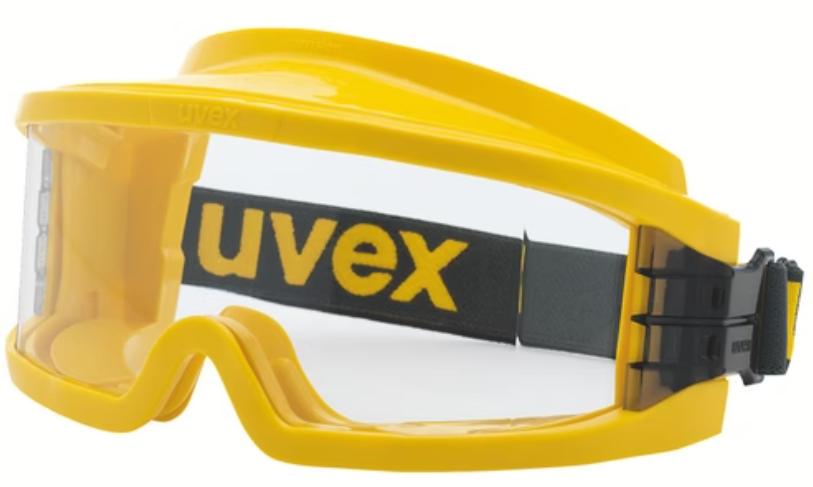
| Eye and head protection | pheos cx2 · super OTG · ultrasonic · ultravision · pheos | Spectacles, over-glasses, goggles and helmets for assessed impact, splash, dust or falling-object hazards. |
| Hearing and respiratory protection | hi-com · com4-fit · K1 · silv-Air | Earplugs/earmuffs matched to noise; particle respirators matched to dust, exposure and fit. |
| Footwear and clothing | uvex 2 trend · ESD footwear · protective clothing | Select for ESD, impact, penetration, slips and workplace conditions; properties vary by model. |
Applications across SuperMRO sectors
Electronics: people and product protection
SMT and assembly require precision gloves and ESD footwear that work within the person–footwear–floor system and grounding measures. Display glass and metal frames may require cut protection. Cleaning, coating, plating and PCB etching require chemical-specific gloves, goggles and face protection where needed. Pressing and logistics have separate noise, foot and head hazards. Local extraction should control solder fumes, with PPE as an additional layer.
Thermal, hydro and wind power
Mechanical maintenance, fuel handling and repair may involve dust, noise, sharp edges, oil and falling objects. Consider eyewear, gloves, footwear, helmets and hearing protection by task. Electrical work, arc hazards, work at height and confined spaces require separate assessment and specialist equipment. An ESD label or ordinary PPE set does not establish suitability for these hazards.
Oil, gas and petrochemicals
Maintenance and chemical handling require assessment of mechanical risks, splashes and chemical contact. Chemical gloves, goggles and face protection must match actual substances and exposure. Hazardous areas need site-specific antistatic, flame-protection and other requirements. Do not assume every uvex product meets them.
Cement, steel and chemicals
Cement tasks need dust and noise assessment; steel processing introduces sharp edges, flying fragments and heat; chemical work requires contact and splash protection. silv-Air, hearing protection, eyewear and gloves can be combined following assessment. High heat or molten metal requires explicitly suitable protection, not ordinary assembly gloves or spectacles.
Paper and industrial manufacturing
Processing, packaging, warehouses and maintenance may require cut or chemical gloves, footwear, eyewear and hearing protection. Select by operation. Gloves must not be used where they introduce entanglement risk around rotating parts unless permitted by the safety assessment and equipment instructions.
Buildings and industrial parks
Electrical/mechanical maintenance, cleaning and warehouse teams need task-based PPE. OTG eyewear accommodates prescription glasses. Check fit and compatibility between eyewear, respirators, helmets and earmuffs in actual work conditions.
Checks before selection
ESD capability does not mean electrical insulation or universal cleanroom suitability. Verify cut, chemical, thermal and hearing ratings against the exact model and current documentation. Type A gloves do not resist every chemical. FFP particle respirators do not provide general gas/vapor protection and are unsuitable for oxygen-deficient environments. Cleanrooms also require checks on particle shedding, materials and site procedures.
SuperMRO: from assessment to wearer trials
SuperMRO can coordinate task surveys, build a role-based PPE matrix and supply suitable uvex products. Trials can assess fit, dexterity, compatibility and user feedback before standardization. Provide task lists, hazard assessments, chemicals/SDS, noise or dust measurements where available, ESD/cleanroom requirements, headcount and sizes. These inputs support selection, issue and replacement planning, with manufacturer technical support when needed.